Shovel-nosed shark
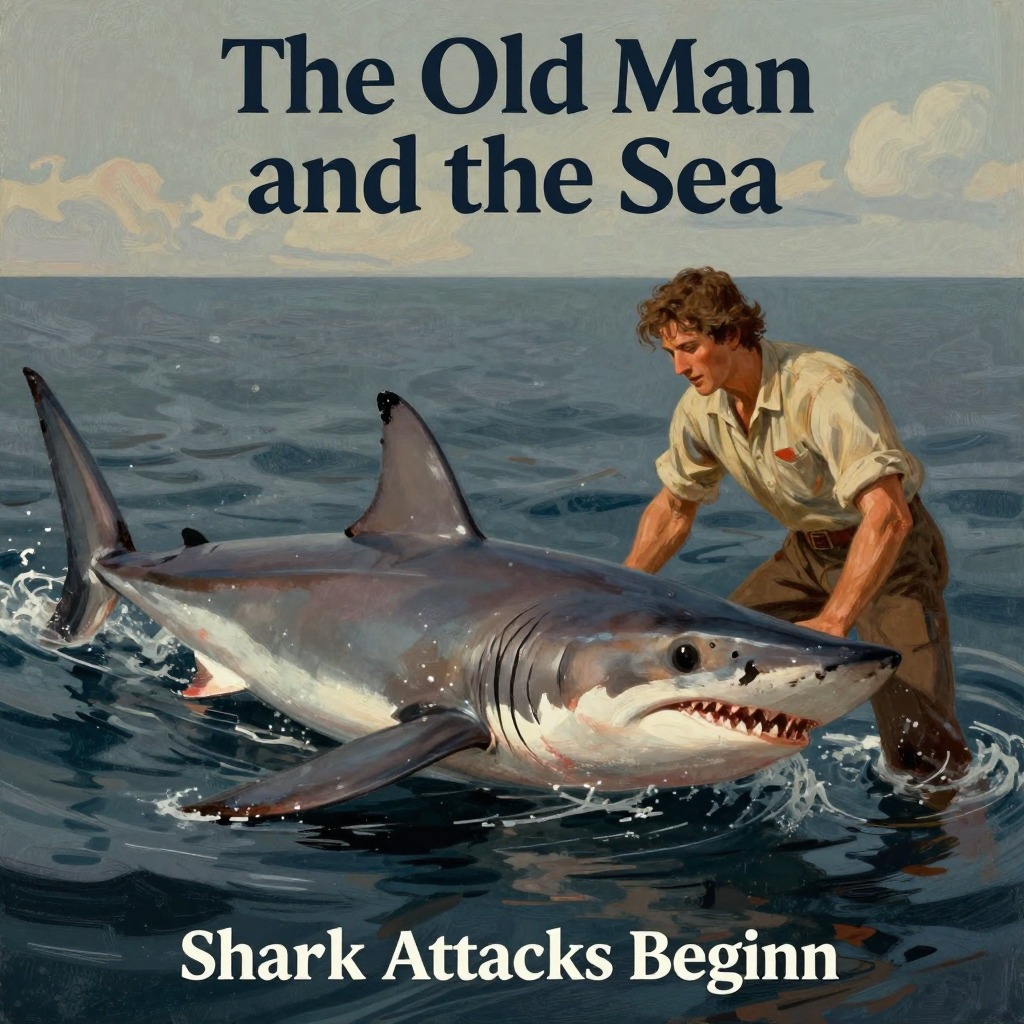
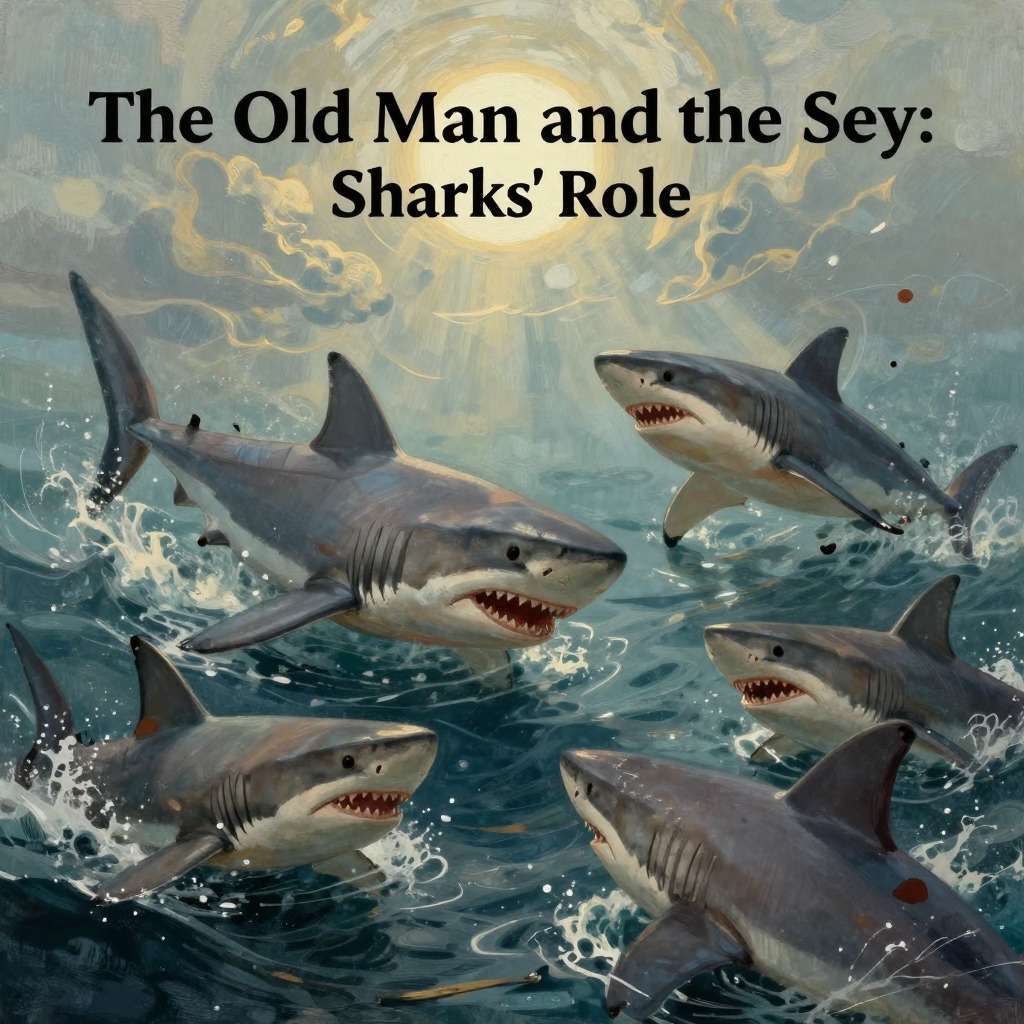
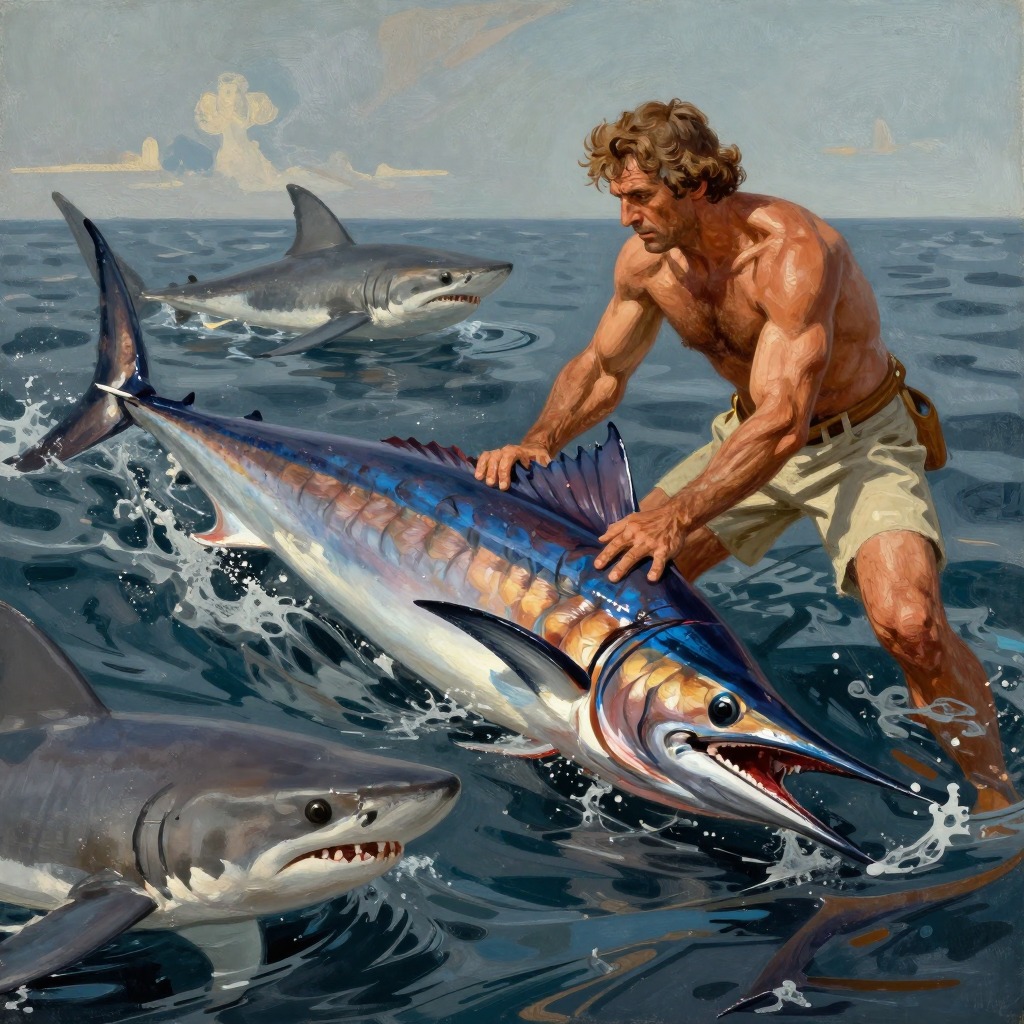
The shovel-nosed sharks, which Santiago calls galanos, are the scavenging predators that systematically destroy the marlin he has caught, turning his hard-won victory into a ruin. Unlike the Mako shark, which Santiago respects as a noble and fearless killer, the galanos are hateful, bad-smelling creatures that are both scavengers and killers. They are identified by their brown, triangular fins and the sweeping movements of their tails, and they have wide, flattened, shovel-pointed heads with white-tipped pectoral fins. When hungry, they will bite at an oar or the rudder of a boat, and they are known to cut the legs and flippers off sleeping turtles or even attack a man in the water if they are hungry, regardless of whether he carries the smell of fish blood or slime. Santiago's first encounter with the galanos comes after he has killed the Mako shark and lashed his knife to the butt of an oar, preparing for the attacks he knows will follow. The first two galanos arrive while he is sailing home, and they attack the marlin with a stupidity driven by their great hunger, losing and finding the scent in their excitement. One turns and goes out of sight under the skiff, shaking the boat as it jerks and pulls on the fish, while the other watches Santiago with its slitted yellow eyes before coming in fast with its half-circle of jaws wide to hit the fish where it has already been bitten. Santiago drives the knife on the oar into the juncture where the brain joins the spinal cord on the shark's brown head, then withdraws it and drives it again into the shark's yellow cat-like eyes. The shark lets go and slides down, swallowing what it has taken as it dies. The other shark continues its destruction under the skiff, and Santiago, letting go the sheet so the skiff swings broadside, leans over and punches at it with the knife. He hits only meat and the hard hide, barely getting the blade in, but as the shark comes up with its head out, he hits it squarely in the center of its flat-topped head. The shark still hangs to the fish with its jaws hooked, and Santiago stabs it in its left eye, then drives the blade between the vertebrae and the brain, severing the cartilage. He reverses the oar, puts the blade between the shark's jaws to open them, and twists it loose, telling the shark to slide down a mile deep and go see its friend or its mother. After this attack, Santiago estimates that the galanos have taken a quarter of the marlin, and of the best meat. The next galano that comes is a single shovel-nose, which Santiago lets hit the fish before driving the knife on the oar into its brain. But the shark jerks backward as it rolls, and the knife blade snaps. Santiago now has only the gaff, the two oars, the tiller, and a short club—a sawed-off oar handle about two and a half feet long—to defend what is left of the fish. The final attack comes just before sunset, when two galanos arrive, swimming side by side and heading straight for the skiff. Santiago lets the first one get a good hold on the fish, then raises the club high and brings it down heavy and slamming onto the top of the shark's broad head, feeling the rubbery solidity and the rigidity of bone. He strikes the shark once more hard across the point of the nose as it slides down. The other shark comes in again with its jaws wide, and Santiago can see pieces of the marlin's meat spilling white from the corner of its jaws. He swings at it, hitting only the head, and the shark wrenches the meat loose. Santiago swings the club down again as it slips away to swallow, hitting only the heavy solid rubberiness. He calls the shark to come in again, and when it rushes in, he hits it solidly as it shuts its jaws, feeling the bone at the base of the brain, and hits it again in the same place while the shark tears the meat loose sluggishly and slides down. Neither shark shows again, though Santiago sees one swimming in circles on the surface. He knows he has hurt them both badly, but he also knows that half of the marlin has been destroyed. The galanos are not merely enemies; they are the embodiment of a mindless, consuming force that reduces Santiago's magnificent catch to a skeleton. Their attacks are not a single, dramatic confrontation but a series of grinding, exhausting assaults that strip away the old man's resources—his harpoon, his knife, his strength—until he is left with only a club and a broken tiller. The galanos are the agents of the sea's cruelty, the scavengers that ensure nothing lasts, and their relentless feeding turns the marlin, which Santiago had called his brother and a noble creature, into a piece of garbage that a tourist mistakes for a shark's tail. In the end, the galanos are what beat Santiago, not the marlin, and their victory is the destruction of the physical proof of his triumph, leaving only the skeleton that the fishermen measure at eighteen feet from nose to tail. The shovel-nosed sharks are thus a key part of the novel's exploration of defeat and destruction: they are the force that makes Santiago's victory incomplete, the reminder that even the greatest effort can be undone by the relentless, mindless hunger of the world. They are the reason Santiago says, "They beat me, Manolin. They truly beat me," and the reason the boy must tell him, "He didn't beat you. Not the fish." The galanos are the final, grinding reality of the sea, the scavengers that ensure that the old man's journey ends not in triumph but in exhaustion and loss.